Buying a TikTok account is a high-risk acquisition, not a guaranteed shortcut. TikTok’s current U.S. Terms of Service say users must not give others access to an account or transfer it without permission. A private sale, escrow payment or changed password does not override that platform rule. Before paying, require current owner-side evidence, identify an official permitted control route, and be ready to decline if the seller cannot show both.
This checklist helps you decide whether to proceed, proceed with conditions, pause or decline. It does not promise that TikTok will accept a control change, preserve monetization, keep the username or continue distribution.
Start with the platform boundary
TikTok’s U.S. Terms of Service, updated July 15, 2026, say not to disclose a password, give others account access or transfer an account without TikTok’s permission. The terms also describe circumstances in which TikTok can restrict or suspend an account and reclaim or reassign a username.
That creates the first decision gate:
- Proceed to diligence: the seller can identify the account owner, show current control and explain the official permitted handoff or management route that applies.
- Pause: the seller claims a route exists but cannot show it in TikTok or current documentation.
- Decline: the plan depends on sharing a password, concealing a control change or assuming a private contract will bind TikTok.
Rules can vary by country and product. TikTok Shop, Ads Manager, Business Center and ordinary TikTok accounts can have different agreements and access models. Review the exact account type and region before treating one workflow as transferable to another.
Compare buying with building before you value the account
Buying may fit when
- the audience already matches the content, language and region you intend to serve;
- the content archive and rights can be documented;
- the account owner can supply current analytics and status evidence;
- an official permitted control or role-based access route is available; and
- you can absorb a complete loss without harming the business.
Building may fit better when
- the new content would change the niche, presenter, language or offer;
- the account’s value depends on the seller’s face, voice or personal contracts;
- the seller will not show owner-side evidence live;
- monetization, Shop, tax or payout access depends on an identity that will not remain; or
- the price only makes sense if reach or revenue continues.
A follower total is not a distribution entitlement. The practical question is whether the audience, content rights, account standing and operating route survive the proposed change.
Build a six-part due-diligence packet
1. Identity and control
Record the handle, numeric account ID when available, account type, country or region, primary owner and the date of the review. Ask the owner to navigate the account live or provide a dated screen recording that keeps the handle and surrounding interface visible.
Review security alerts, active or recent devices, linked sign-in methods, connected apps and two-step verification. Do not ask for a password merely to audit the account. A seller who supplies credentials before proving identity has not solved the ownership question.
2. Account status
Ask the owner to open TikTok’s current account-status or Account Check area and show any posting, profile, comment, messaging or login restrictions. Save the date and the visible status. A clean screen is evidence for that moment; it is not a warranty against later review.
Also inspect post-level recommendation or policy notices, unresolved appeals and program-specific restrictions. Ordinary performance variation should not be described as a hidden penalty without supporting evidence.
3. Audience and performance
Use owner-side analytics rather than cropped screenshots. TikTok’s current Web Business Suite documentation says eligible Business Accounts can review and download reach, engagement, conversion, follower, audience and video data across standard or custom date ranges. Availability depends on the account and region.
Capture a fixed review window and compare:
- follower movement with the posts, promotions or collaborations that may explain it;
- top countries, cities, age ranges and activity with the intended audience;
- the median performance of a fixed recent-post sample, rather than one viral post;
- specific, conversational and repeated comments in the context of the videos; and
- paid, giveaway or promoted activity separately from ordinary posts.
For a reproducible audience review, use the TikTok fake-follower audit. It deliberately avoids invented “authenticity percentages” and treats unexplained anomalies as questions to resolve.
4. Content and rights
List the videos that create most of the account’s recent value. For each, record who created the footage, voice, music, graphics and script; which licenses or releases apply; and whether the buyer can keep using the material.
Separate the right to access an account from the right to reuse its content. A seller may control the login while a musician, presenter, agency, sponsor or client owns part of the archive. Remove revenue or traffic that depends on rights that do not transfer.
5. Monetization and commerce
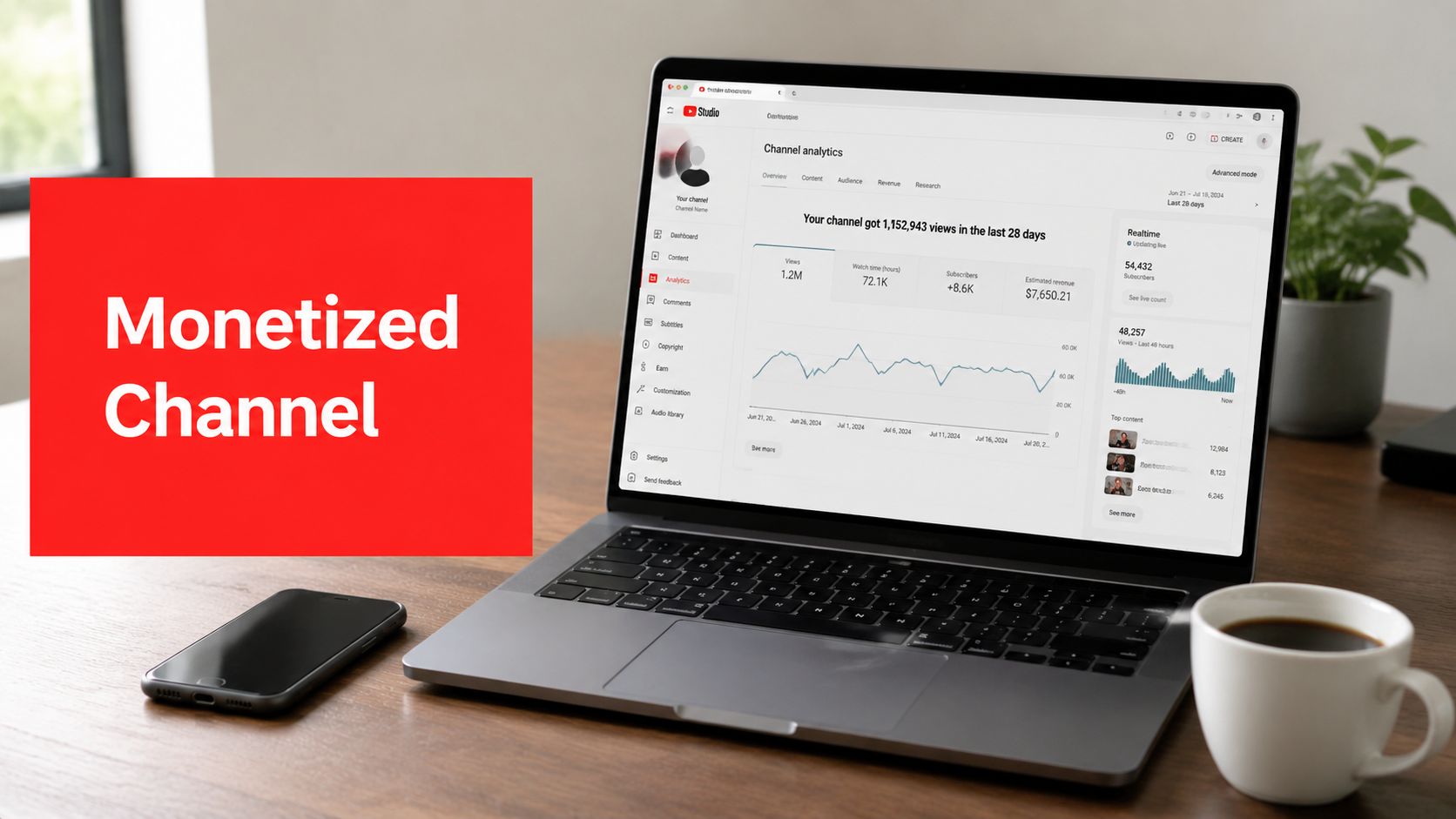
Verify each earning feature separately inside its current dashboard. TikTok’s Creator Rewards guidance describes a dashboard for estimated rewards, performance and video eligibility, and says qualifying videos must be original, high quality and longer than one minute. Program access and rewards depend on current eligibility; an old payment screenshot is not proof of continuing access.
For each feature, record:
- the program or product name;
- current status and any warnings;
- the identity, country, age and account-type requirements;
- the covered period for balances or payouts;
- tax, payment and Shop relationships that belong to the seller; and
- what requires a new application or verification.
The TikTok monetization-program guide helps separate feature-specific eligibility. Do not price external brand contracts, affiliate accounts or Shop inventory as if they automatically belong to the TikTok profile.
6. Transaction evidence
Document the exact asset, agreed price, inspection period, evidence supplied, release conditions and remedy if the seller’s statements are false. Use a reputable transaction process appropriate to the jurisdiction and amount. Escrow can reduce payment risk, but it cannot make an unsupported transfer compliant with TikTok’s terms or guarantee account retention.
Before any funds are released, the buyer should be able to answer:
- What exactly is being acquired?
- Which rights and contracts are included?
- Which official access route supports the proposed control?
- Which identities, payouts or programs must be reverified?
- What evidence would cause the buyer to pause or decline?
- Who bears the loss if platform access changes?
Use one evidence record for every material claim
A useful record has five fields:
- Claim: the seller’s statement, such as “most viewers are in the United States.”
- Evidence: the live page, export, contract or rights file that supports it.
- Captured: date, time, selected range and account identity.
- Limit: what the evidence does not prove.
- Decision: confirmed, conflicting, unavailable or requires a condition.
This format prevents one screenshot from carrying more weight than it deserves. It also lets another reviewer reproduce the decision without relying on the seller’s narrative.
A hypothetical account review
Assume a seller offers a 90,000-follower cooking account. This example is illustrative and does not describe a real listing.
- The owner shows a dated 60-day analytics view and downloadable audience data. Most recent followers came from two recipe posts, and the leading country matches the proposed content plan.
- The latest 20 ordinary posts have a stable median, while one viral post is treated as an outlier.
- Account Check shows no current restriction, but an older removed post and resolved appeal are documented.
- The seller owns the original recipe footage but used licensed music that requires a new review.
- Creator Rewards is visible, but tax and payout details belong to the seller and continuing eligibility is unconfirmed.
- The seller cannot show TikTok permission or another supported control route for the proposed transfer.
The correct result is pause. Audience and content evidence may be credible, but the unresolved control route is a material dependency. It would be misleading to convert those good signals into a promise of safe ownership or future revenue.
Set the decision before negotiating price
- Proceed: current evidence is consistent, rights are documented, the official control route is supported, and the price does not depend on guaranteed reach or earnings.
- Proceed with conditions: bounded gaps remain and are covered by specific evidence deadlines, holdbacks or exclusions.
- Pause: identity, status, rights, analytics, monetization or the control route cannot yet be verified.
- Decline: evidence conflicts, material facts are withheld, artificial engagement is present, or the plan depends on bypassing TikTok’s terms or security controls.
Price comes after the decision. Avoid universal per-follower prices and unsupported engagement thresholds. Estimate only the value you can evidence, then discount for rights gaps, audience concentration, program dependence and the possibility of losing access.
Frequently asked questions
Does changing the email and password prove ownership?
No. It can show current credential control, but it does not prove TikTok permission, content rights, entitlement to payouts or durable access.
Can escrow make a TikTok account transfer safe?
Escrow can reduce the risk that one party takes payment without completing agreed steps. It cannot override TikTok’s terms, bind TikTok or guarantee continued access, recommendation or monetization.
Should I trust a live analytics screen share?
It is stronger than a cropped screenshot when the handle, date range and navigation remain visible. Preserve the evidence and compare it with exports, public posts and account status. It still proves only the state shown at that time.
Does monetization carry over?
Do not assume it does. Verify every feature’s account, identity, country, age, content and payment requirements. Treat continuing access and future rewards as unknown until TikTok confirms them for the controlled account.
How do I check for fake followers?
Use owner analytics, growth events, a fixed recent-post sample, comment context, a documented follower sample and account status. Do not rely on an unexplained public checker score.
Where can I review available accounts?
The MonetizedProfiles account catalog lists current options. Apply the same evidence packet to any listing and verify the applicable TikTok terms before committing funds.
Keep the conclusion dated
Save the terms version, source URLs, evidence capture dates and reviewer. Recheck the platform rules immediately before a decision because access models, program eligibility and interfaces can change.
Official TikTok guidance was checked on November 16, 2026. This article is an operational due-diligence framework, not legal advice, a platform permission or a promise of access, distribution, monetization or earnings.